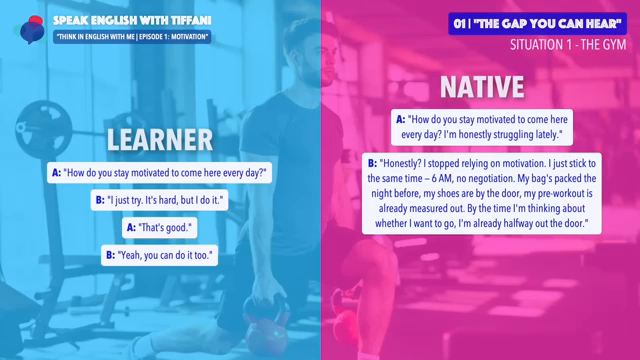
The video "Think In English With Me | Episode 1: Motivation" by teacher Tiffany is an educational resource designed to help English learners transition from literal translation to thinking in English like a n

The video "Think In English With Me | Episode 1: Motivation" by teacher Tiffany is an educational resource designed to help English learners transition from literal translation to thinking in English like a n
ative speaker. The lesson is structured into five specific sections, each building on the last to bridge the "gap" between learner-level speech and native-level fluency.
The Five-Section Framework
Section Foc
us Purpose
1. The Gap Identifying differences Listening to how learners vs. natives discuss the same topics.
2. The Term Active vocabulary Extracting specific, high-impact phrases from native dialogues.
3. Th
e Structure Sentence building Learning the underlying patterns native speakers use to organize thoughts.
4. The Sound Emulation Combining vocabulary and structure to sound like a native speaker.
5. Your Turn
Practice Applying the learned patterns to new, real-life discussion questions.
Core Concepts and Examples
The video illustrates these concepts using three real-life situations related to motivation, analyzing
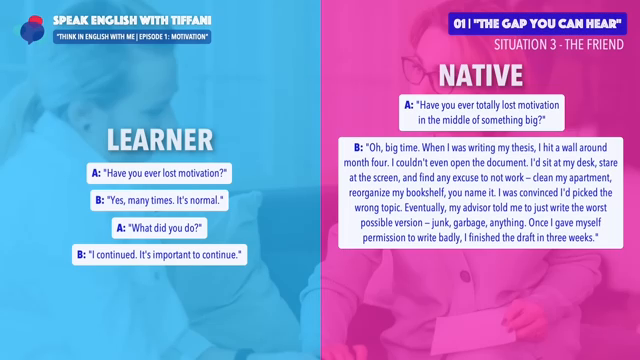
them through the lens of the framework:
1. Identified Terms (Vocabulary)
These phrases are highlighted because they carry more "mindset" and native nuance than standard learner vocabulary.
"No negotiation" [
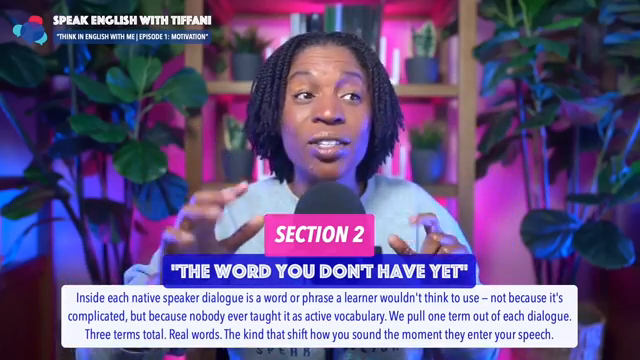
06:57]: Used for a non-negotiable commitment.
Learner alternative: "I never miss it." (Flatter, less assertive).
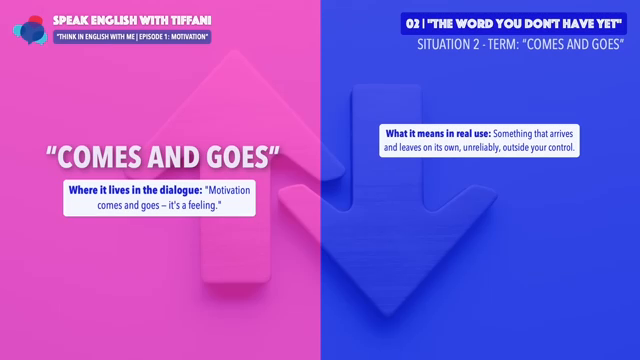
"Comes and goes" [08:36]: Describes something unreliable outside of one's control.
Learner alte
rnative: "Sometimes I have it, sometimes I don't." (Wordy).
"Hit a wall" [10:06]: A sudden, total inability to continue forward.
Learner alternative: "I became very tired." (Lacks the intensity/suddenness).
2
. Sentence Building Patterns
Native speakers rely on hidden structural patterns rather than just better vocabulary:
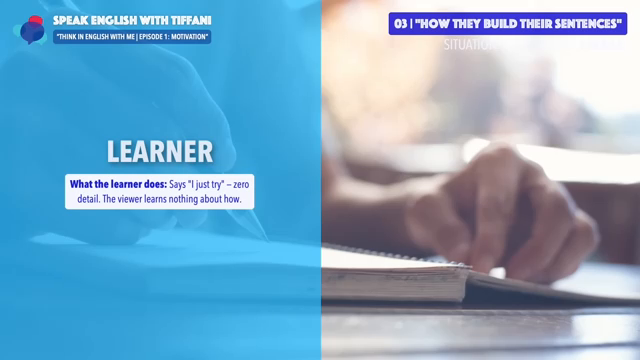
Details: Stacking concrete, visual details (e.g., specific times, objects, or actions) inste
ad of abstract explanations [12:26].
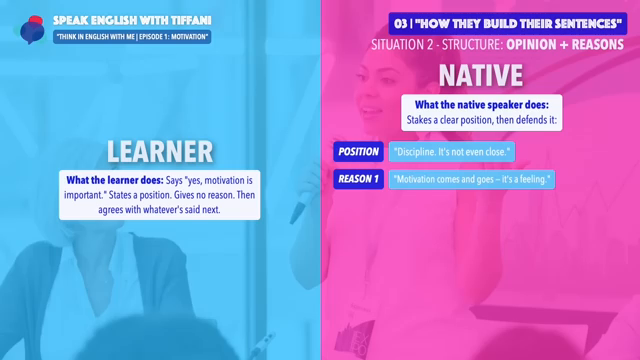
Opinions + Reasons: Stating a clear position and backing it with stacked, logical reasons without softening the opinion [13:51].
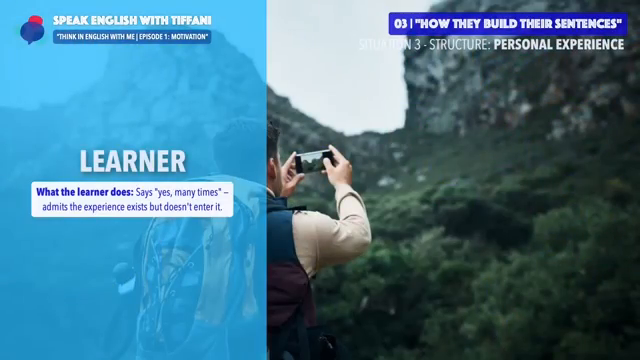
Personal Experiences: Moving beyond summar

y by placing the listener inside the experience with a clear beginning, a "worst moment," a turning point, and a final result [15:35].
Summary of the "Gap"
The central thesis of the video is that English lear
ners often prioritize being grammatically correct, which is necessary but insufficient for sounding like a native. Native speakers provide "bite" and clarity to their speech by:
Removing the "clunky" middle:
Replacing long-winded explanations with specific, idiomatic expressions [09:20].
Using concrete structures: Avoiding vague, abstract language in favor of specific details or stories that allow the listener to
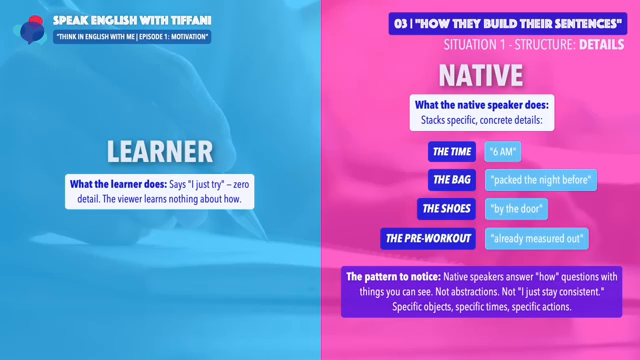
visualize the experience [12:55].
The video concludes by inviting viewers to practice these patterns—details, opinions/reasons, and personal experiences—when answering common discussion questions, thereby sh
ifting from memorizing sentences to actively thinking in the language [20:12].
https://www.youtube.com/watch?v=nAdBrWENORY
Think In English With Me | Episode 1: Motivation
Speak English With Tiffani · 84K vie
Viewer Discussion & Comments